

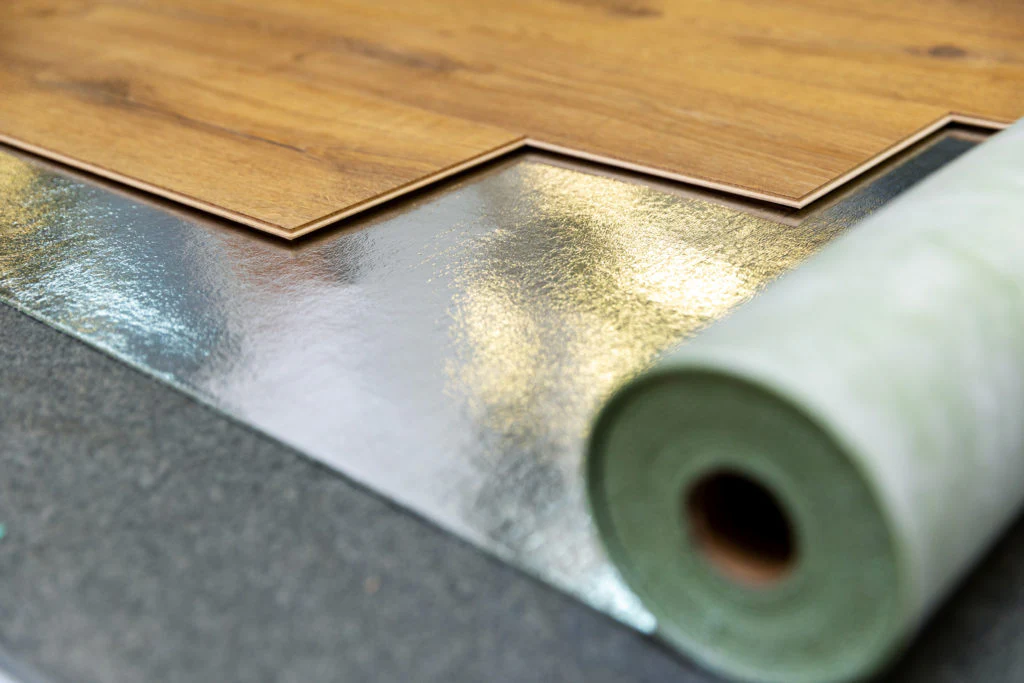
A Sicklerville homeowner replacing worn carpet may assume every new floor needs a separate cushion underneath. That assumption sounds reasonable, but the answer depends on the flooring, subfloor, and installation conditions. Underlayment can improve comfort and sound control, yet adding the wrong product may create installation problems.
What Underlayment Actually Does
Underlayment is a thin layer installed between the subfloor and finished flooring. It may help smooth minor imperfections, reduce noise, provide extra comfort, or protect certain materials from moisture below.
The important distinction is between underlayment and a moisture barrier. Some products offer limited moisture protection, while others are designed specifically for damp conditions. Neither should replace proper subfloor preparation or moisture testing.
LVP often includes an attached pad, especially with click-lock rigid-core products. Adding another layer beneath it may make the floor too flexible, which can stress locking edges and affect warranty coverage. Before purchasing extra material, check the manufacturer’s installation requirements.
Does LVP Need a Separate Layer?
Many rigid-core LVP products install directly over a clean, firm, and reasonably level subfloor. That construction provides stability, while the attached pad handles basic sound and comfort needs. You can compare rigid-core LVP styles to see how construction varies across available products.
A separate underlayment may still make sense in specific situations. Concrete slabs, upper-level rooms, and spaces with noticeable sound transmission may benefit from a compatible acoustic or moisture-control product. The material must match the flooring system and the subfloor.
Water also deserves careful attention in South Jersey homes. Concrete can hold moisture, and basements may experience seasonal dampness. For moisture-prone rooms, waterproof luxury vinyl may offer better protection than relying on a generic pad.
Hardwood Has Different Requirements
Hardwood flooring usually depends more heavily on the installation method and subfloor type. Nail-down floors may use a specific layer to reduce friction, limit moisture movement, or support the manufacturer’s warranty. Engineered products may have different requirements than solid planks.
A wood subfloor should be dry, secure, and properly prepared before installation begins. Uneven areas, loose panels, or excess moisture can cause movement and noise regardless of the underlayment selected. Reviewing the basics in this hardwood flooring information can help homeowners understand how construction and installation affect performance.
Existing hardwood may not need new underlayment at all. If the boards remain structurally sound, professional sanding and refinishing can restore their appearance without removing the original floor. That approach may preserve character while avoiding the added cost of replacement materials.
How to Choose the Right Approach
Start with the subfloor rather than the product sample. An installer should identify whether the surface is concrete, plywood, or another material. Moisture levels, floor height, transition areas, and the flooring manufacturer’s instructions all influence the recommendation.
Think about the room’s purpose, too. A bedroom above a living area may benefit from acoustic control. A basement may require moisture planning. A busy kitchen may need a durable surface with simple maintenance instead of extra softness underfoot.
The team at All Pro Interiors takes a practical approach because every home has different conditions. As a family-owned and operated flooring company, the goal is to recommend what supports the floor’s performance without adding unnecessary cost. Homeowners comparing materials can also use the shop-at-home service to view samples in their own lighting.
Underlayment is not automatically necessary, but it is not merely an optional extra, either. The right answer comes from matching the layer to the flooring, subfloor, moisture conditions, and manufacturer specifications.
For a home in Winslow Township or elsewhere in South Jersey, visit the Sicklerville showroom or request a free flooring estimate from All Pro Interiors. You will receive straightforward guidance on the materials and preparation your project actually needs.


